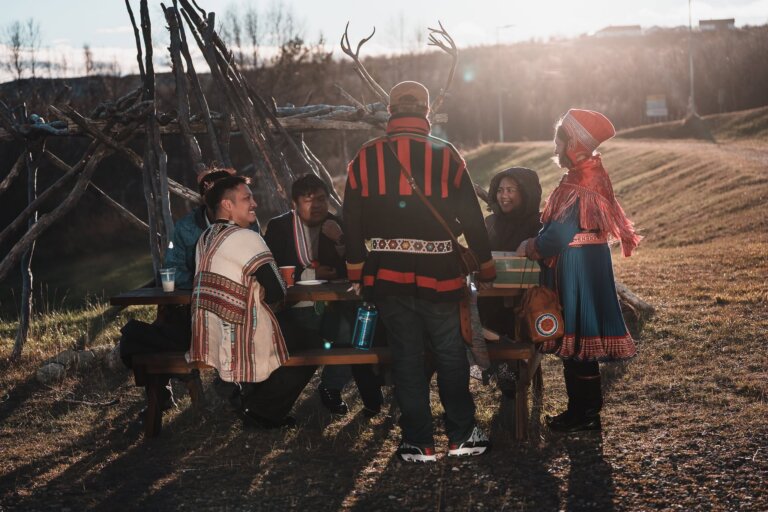
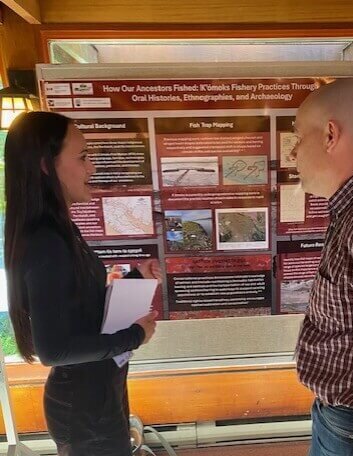
Varpu shared what she has heard about fishing camps, where families and kinship groups gather during the fishing season. These camps bring together several generations who work, learn, teach, and spend time together. Knowledge transmission happens naturally through participation in everyday activities, while food preparation and sharing strengthen social ties and cultural identity. Fishing is not merely the act of catching fish; it encompasses a whole set of activities, including processing, smoking, preserving, sharing, and consuming salmon. These interconnected practices form an important foundation of Indigenous knowledge and cultural continuity.
Varpu was preparing to travel to a community summer camp in Qizhjeh Vena (Lake Clark), in Dena’ina territory, another important intergenerational gathering that combines cultural education, community celebration, and youth engagement. Ida and Stephan also learned about media projects that use podcasts and oral history to document and share local knowledge within the community.
Another theme of their discussion was land governance in Alaska. Indigenous communities (and everyone else) navigate a complex landscape of overlapping jurisdictions involving federal agencies, state authorities, Native corporations, and private landowners. These arrangements shape how natural resources are managed and how communities can access and use their traditional territories. Varpu described how local communities continue to face pressures from large-scale resource extraction projects that may threaten important fishing areas and subsistence practices.
Conversation also returned repeatedly to the theme of North-to-North exchange. The history of reindeer herding in Alaska illustrates how people, animals, knowledge, technologies, and political agendas have travelled across the circumpolar North. While Sámi herders were brought to Alaska from northern Scandinavia, many of the reindeer themselves originally came from Chukotka in northeastern Siberia. These movements reveal the long and often complex history of northern connections, involving both state-led initiatives and Indigenous adaptation, creativity, and resilience.
Finally, Varpu, Ida, and Stephan reflected on the practical realities of conducting research and collaboration in Indigenous communities across the Arctic. Whether in Alaska, Sápmi, or Siberia, community life often follows rhythms that differ from those of universities and administrative institutions. Plans may change suddenly, opportunities arise unexpectedly, and researchers must remain flexible and responsive to local priorities and seasonal activities. They recognised how familiar these experiences felt across different northern regions and how important such flexibility is for building meaningful long-term relationships.
This dialogue in Anchorage highlighted not only the diversity of Indigenous experiences across the North but also the many connections that link northern communities through shared histories, challenges, and ways of living with the land.