Hopp til innholdet

Birgejupmi in Dialogue: Indigenous Knowledge and Photovoice Exhibition at the UN CBD SB8J-1 in Panama

Indigenous-led participation highlights connections between biodiversity, knowledge, land, and ocean.

Jelena Porsanger, Wasiq Silan and Gunn-Britt Retter at the UN meeting.

Project member: Wasiq Silan

Published: 10.11.2025

UN Convention on Biological Diversity

As part of Birgejupmi’s Work Package 3project member Wasiq Silan (National Dong Hwa University, Taiwan) participated in the UN Convention on Biological Diversity’s First Meeting of the Subsidiary Body on Article 8(j) and other provisions related to Indigenous Peoples and Local Communities (CBD SB8J-1), held in Panama City from 27–30 October 2025.
The SB8J-1 meeting marked a historic step as the first UN platform dedicated specifically to Indigenous Peoples and Local Communities (IPLCs) under the Convention on Biological Diversity. The gathering prepared the ground for the upcoming COP17 in Armenia (2026), emphasizing the vital role of Indigenous and local knowledge systems in achieving the post-2025 Global Biodiversity Framework.
Taiwan’s Indigenous voices at the UN stage
Wasiq Silan joined the meeting as part of the Millet Ark team from Taiwan — a collective of Indigenous scholars, artists, and community leaders from the Atayal, Amis, Bunun, and Paiwan peoples. The team shared community-based work on ecological restoration and cultural revitalization centered on the cultivation of millet, a plant at the heart of Indigenous cosmology, ceremony, and food sovereignty in Taiwan. Their contribution illustrated how biodiversity conservation and climate resilience are inseparable from cultural and ethical relationships with both land and ocean—two interconnected living systems sustaining Indigenous life and memory.
Photovoice Exhibition: Sharing birgejupmi across Indigenous worlds
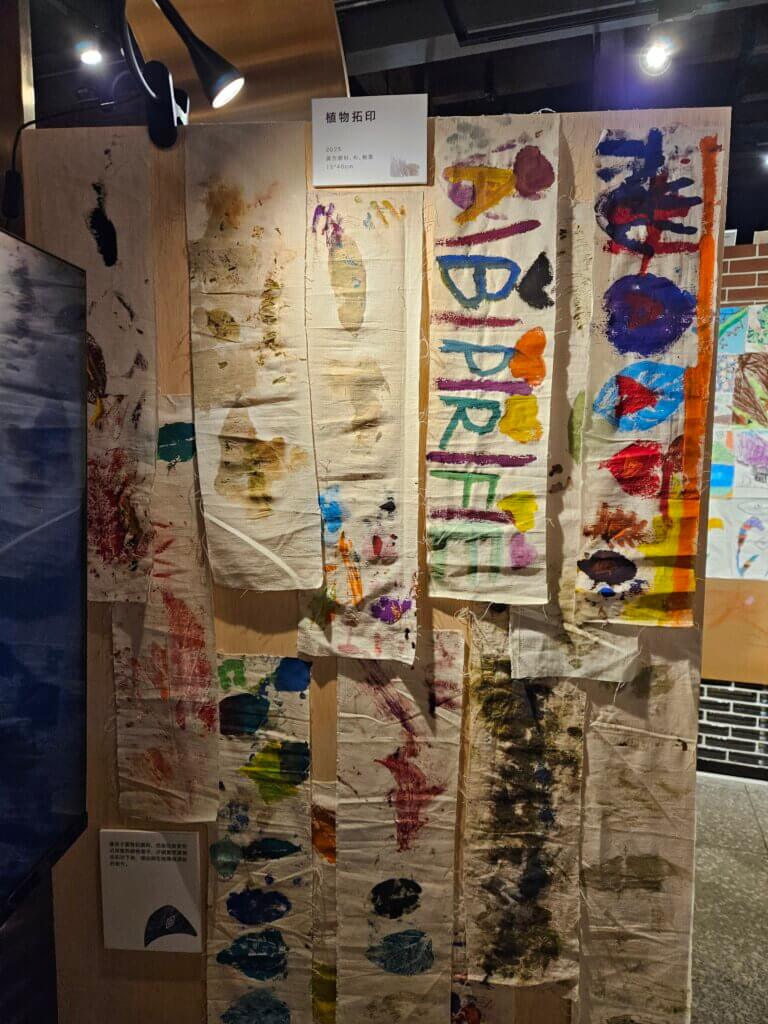
Alongside the formal sessions, the Millet Ark team was invited by the Ărramăt Project (University of Alberta, Canada) to participate in the Photovoice Exhibition, a side event of the SB8J-1. The exhibition featured visual narratives from 27 Indigenous-led initiatives worldwide, exploring how communities use their own knowledge systems to respond to global challenges of health, sustainability, and biodiversity.
Through their contribution “Gaga” that speaks about human-environment relations and care through Millets, the team presented the Tayal concept of Gaga (law and ethics) and how it emcompasses the concept of birgejupmi in the Tayal context. The Photovoice exhibition as a whole established a dialogue of the concept of birgejupmi across diverse Indigenous-led, place-based contexts, including experiences from Sápmi (museum repatriation) and Inuit Inuvialuit homelands (reviving knowledge about whales and sharing muktuk, whale skin and blubber; Tarium Niryutait) Together, these photos and stories emphasized how Indigenous understandings of balance, care, and reciprocity extend across land and sea, weaving multiple worlds of survival and belonging.
Weaving Indigenous solidarity through education and practice
The participation of Millet Ark reflects growing Indigenous solidarity that is nurtured through learning, art, and community engagement. At National Dong Hwa University, such collaborations are integrated into teaching and research, including the course “Weaving Knowledge and Walking Narratives,” co-developed with Millet Ark, which engages students in community-based learning grounded in Indigenous worldviews.
This form of relational education resonates with Birgejupmi’s commitment to Indigenous-led methodologies that bridge academic, artistic, and community-based knowledge. It demonstrates how cultivating, weaving, and storytelling can strengthen relations across Indigenous territories—lands and oceans connected by shared responsibilities for life, knowledge, and future generations.

This page is translated with AI. If you have any questions or feedback, please contact us.