Indigenous Knowledge & Sustainable Arctic Futures
The Northern Sámi word birgejupmi refers to “ways to manage” or “ways to get by” and reflects the principle of living with respect for nature by taking only what is needed while ensuring that resources remain available for future generations. The BIRGEJUPMI project works to strengthen community engagement, Indigenous knowledge, and relational environmental decision-making in coastal regions of Sápmi and Kalaallit Nunaat that is based on the interconnected relationships between coastal people and the sea. The project brings into dialogue Indigenous, Western, and local knowledge systems. Our research is grounded in holistic, ethical and equitable community-based approach to research with strong Indigenous leadership and cooperation with Indigenous organisations.
Watch the filmic essay “Birgejupmi Through Art” co-created by Sámi artist Kine Yvonne Kjær and Kalaaleq artist Ivínguak Stork Høegh, an initiative by Dáiddadállu.
Key Research and Action Areas
BIRGEJUPMI’s work is organized into 14 interconnected work packages, each addressing specific aspects of research, knowledge co-production, and community-led action across Arctic coastal regions.
BIRGEJUPMI centers relational research that honours storytelling, personal reflection, mutual visits, and sharing experiences. The project embraces diverse art forms and culturally rooted land- and sea-based practices, both collective and individual.
Partner: Saami Council
WP1 'Ethical, collaborative, and inclusive research approaches and methodologies' will identify knowledge gaps and research needs in Arctic coastal communities, provide replicable frameworks for research initiatives that support collaborative knowledge creation, and assess and identify best practices for co-creative/co-productive methods and their implementation within a circum-Arctic scope.
Learn morePartner: UiT - The Arctic University of Norway
WP2 'Human-species-ecosystem interdependencies in changing Arctic coastal regions' aims to assess changes in human-species and ecosystem interactions in the Varanger and Porsanger fjords, evaluate current management of red king crab, pink salmon, and seals, revitalize Sámi Indigenous Knowledge on seals, and strengthen pan-Arctic Indigenous and local knowledge exchange on the marine environment.
Learn morePartner: University of Copenhagen
WP3 'Coastscapes-relationalities: Uncovering silenced knowledge systems and crafting a relational One Health approach for community resilience, reconciliation, and well-being' contributes to uncovering marginalised and silenced Indigenous knowledge within archival records. It connects archival research with art, healing, and relationships with landscape and sea to develop creative, multimodal approaches that support community resilience, well-being, and reconciliation.
Learn morePartner: Research Institute for Sustainability (RIFS) | at GFZ
WP4 'Local and global futures: young people’s visions of sustainable livelihoods and inclusive environmental decision-making' aims at assessing the impacts, including opportunities and challenges, of climate change mitigation measures as experienced by young people living in Finnmark. In doing so, WP4 wants to collaboratively engage and understand young people’s vision of future in relation to the expansion of power production and wind energy projects in the Arctic.
Learn morePartner: UiT - The Arctic University of Norway
WP5 'Indigenous knowledge-informed coastal resources management and conservation strategies embedded in a multi-actor approach' co-develops sustainable marine resources management and relational environmental governance options informed by Indigenous knowledge, scientific and local expertise, building on the work of WP2 and responding to changing fjord ecosystems.
Learn morePartner: UiT The Arctic University of Norway
WP6 'New actors and spaces for improved collaboration, knowledge building, and inclusive decision-making' explores and implements innovative approaches to transform the roles of museums, archives, and libraries, positioning them as new knowledge stewards/new Elders, and fosters a shift in the interactions among knowledge centers and coastal Arctic communities.
Learn morePartner: Sámi Allaskuvla
WP7 'Empowering Indigenous higher education institutions and remote Arctic coastal communities by developing gender-sensitive and innovative education formats' analyses the link between gender asymmetries (female out-migration leaving young men behind in higher education and art production) and existing forms of Indigenous education and knowledge validation.
Learn morePartner: University of Tartu
WP8 'Mobilizing youth leadership and exchange for shaping socio-economic transitions in Arctic coastal regions linked to the EU Green Deal' supports young people in Arctic coastal areas to take an active role in shaping their communities’ future in response to climate change and social challenges.
Learn morePartner: Dáiddadállu
WP9 'Mobilizing knowledge through art-Indigenizing research methologies through Sámi and Indigenous art' aka 'Birgejupmi Through Art & Duodji' emphasizes Indigenous art and craft as a tool of birgejupmi in one's environment, as a means of political survival and as a means of strengthening Indigenous voices and land and sea relations.
Learn morePartner: Saami Council
WP10 'Ethical approaches, circular models and evaluation methods for working across different knowledge systems' builds on WP1 to ensure reflexive ethics and methodological engagement throughout the project. The WP will develop and test a practical toolkit for future Arctic research and draw on learning across the project to develop recommendations for more ethical, equitable, and reciprocal approaches to knowledge co-creation.
Learn morePartner: Árvu AS
WP11 focuses on delivering a comprehensive communication and design package that enhances the visibility, credibility, and effectiveness of Birgejupmi. WP12 will monitor and revise the CDEO strategy as needed in close collaboration with project partners and continue to support and advise the consortium on effective communication and outreach.
Learn morePartner: University of Oulu
WP13 is dedicated to ensuring the overall coordination and successful delivery of the project. WP14 leads the final phase of the Birgejupmi project, ensuring smooth coordination, thorough evaluation, and high-quality results.
Learn more
What is Birgejupmi?
Knowledge Systems in Dialogue
BIRGEJUPMI brings together Indigenous, Western, and local knowledge to support sustainable Arctic coastal futures. Grounded in respect for Indigenous rights, presence, and ways of knowing, the project is guided by Etuaptmumk (Two-Eyed Seeing), articulated by Mi’kmaw Elder Albert Marshall. Through decolonial, co-produced research, BIRGEJUPMI centers relationships between people, sea- and coastscapes, strengthens Indigenous coastal governance and management practices, and documents livelihoods in Sápmi and Kalaallit Nunaat. This work supports community-led engagement and informs respectful policies that care for land, sea, and communities.
Living Archives & Coastal Resilience
BIRGEJUPMI explores Arctic coastal landscapes and seascapes as living archives of knowledge, memory, and relationships between people and the environment. By working with Indigenous communities, museums, archives, and libraries, the project helps uncover and make visible Indigenous knowledge that has often been overlooked or silenced. Through collaborative research, artistic practices, and community engagement, BIRGEJUPMI strengthens connections between culture, environment, and well-being. The project contributes to developing Indigenous knowledge–grounded approaches to One Health, supporting more inclusive decision-making and resilient Arctic coastal communities.
Youth & Arctic Futures
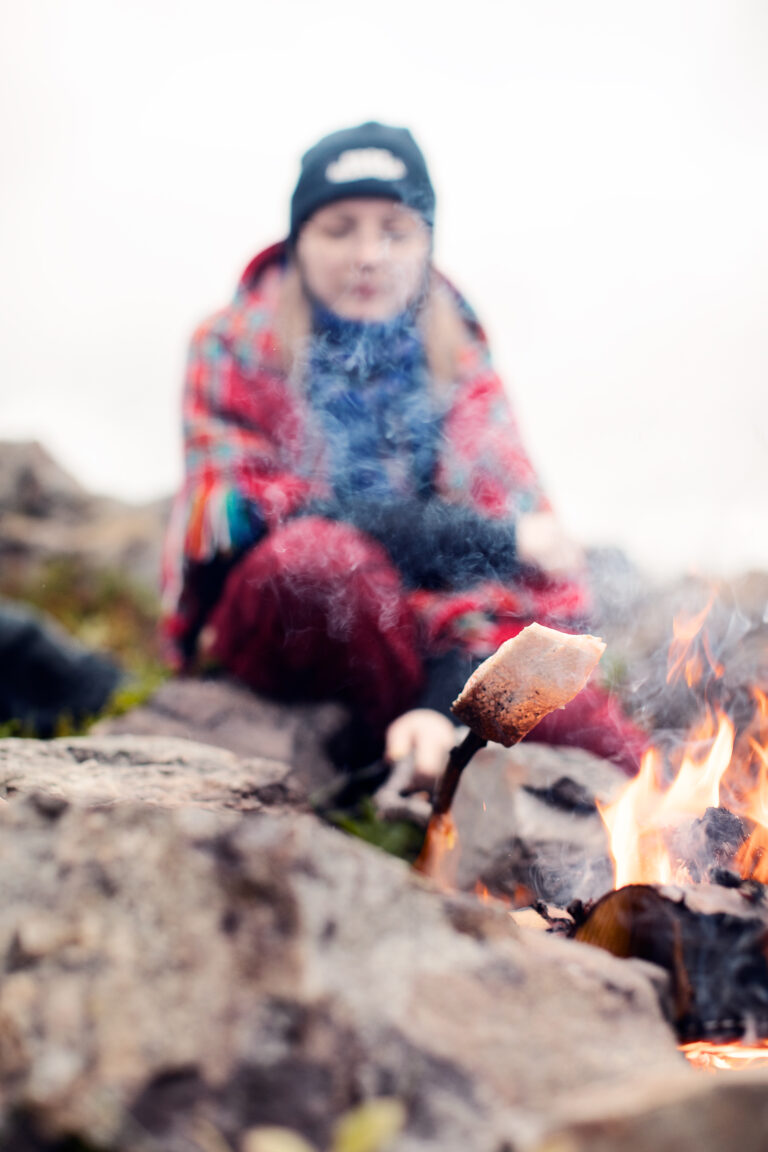
BIRGEJUPMI engages with young people in Sápmi and accross the Arctic to explore lived experiences of environmental change and adaptation, including the impacts of the green energy transition. Through participatory, creative and co-design approaches, the project creates spaces to share young people’s perspectives, hopes and visions for alternative futures. By addressing challenges ranging from invasive species to growing development pressures, BIRGEJUPMI contributes to strengthening local resilience and livelihoods.
News & Publications
Stay up to date with BIRGEJUPMI’s latest publications, events, news, reports, and stories from the field.
Explore our publications and other project outputs also on ZENODO.
-
Čakča skuvla in Guovdageaidnu: Learning, connecting, and carrying our relationships forward
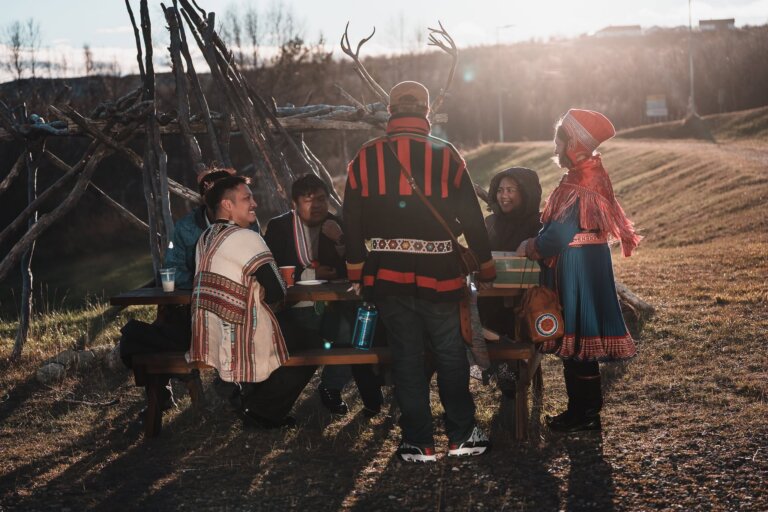
Published: 20.10.2026FieldworkFrom 5–12 October 2026, Indigenous students, social workers, artists, and researchers gathered in Guovdageaidnu, Sápmi, for Čakča skuvla. Through shared conversations, art, music, food, and stories, we nurtured relationships and solidarity across Sápmi, Kalaallit Nunaat, and Taiwan.
Read more -
Learning from the Past: Birgejupmi at the 11th Oceans Past Initiative XI (OPI XI) Conference in Victoria
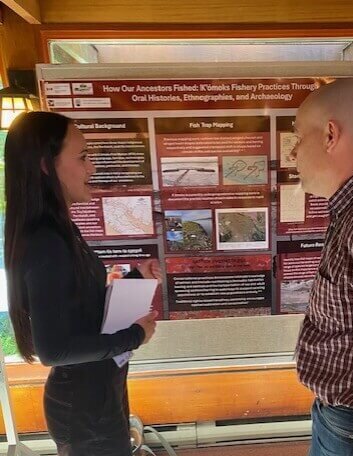
Published: 15.10.2026FieldworkOn their North-to-North Dialogue Journey, Ida Hydle and Stephan Dudeck from WP2 explore the past, present and future of human–ocean relationships at the Oceans Past Initiative Conference in Victoria, Canada, and how Indigenous knowledge inspire sustainable futures.
Read more -
The Karasjok case in the Finnmark Land tribunal and the importance of the term Birgejupmi
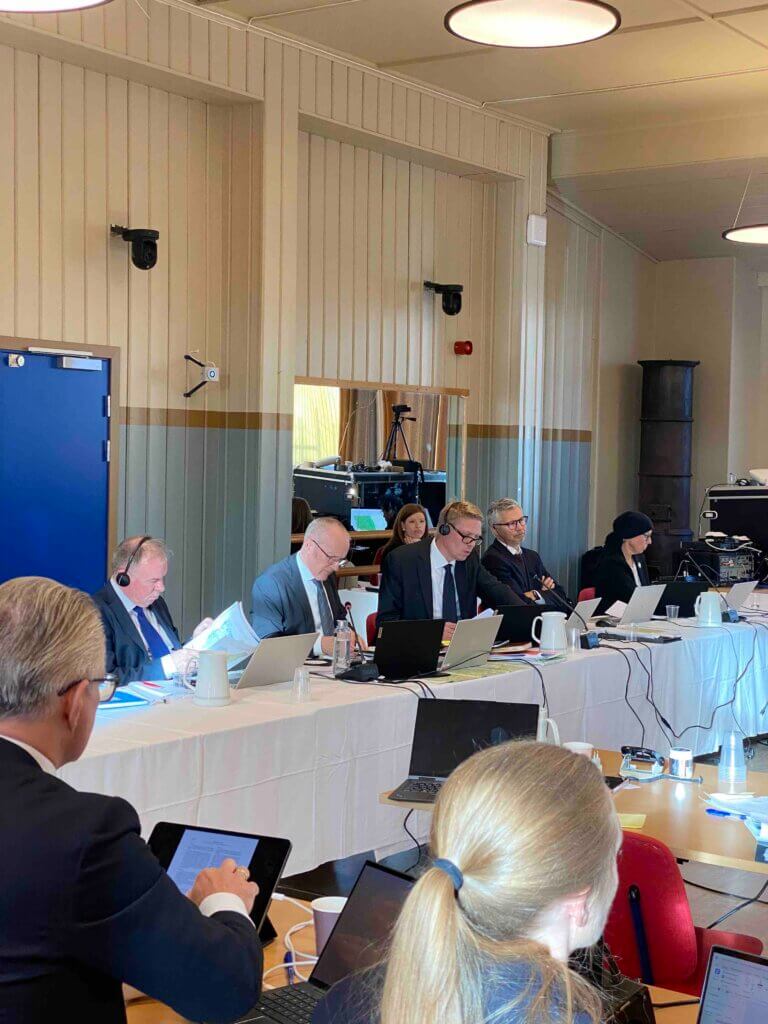
Published: 14.10.2026FieldworkFrom the Karasjok courtroom, BIRGEJUPMI researcher Ida Hydle reflects on Sámi land rights, collective stewardship, and the meaning of birgejupmi. The case raises fundamental questions about Indigenous worldviews, legal recognition, and relationships between people and the land.
Read more
BIRGEJUPMI focuses on the Arctic coastal areas in Sápmi and Kalaallit Nunaat
Discover where we work and learn more about each place.
Click each place to read more
Áltá / Alta is a key Birgejupmi site, hosting workshops and working with Alta Museum. The museum’s Sámi heritage work helps counter colonial silencing and supports Indigenous empowerment and sustainable, knowledge-based development.
Divrráid suohkan / Dyrøy is a key Birgejupmi site, selected for its Sámi heritage and strong local knowledge. Working with Gamtofta siida and healer Knut Lunde’s archive fosters dialogue, research, and Indigenous knowledge revitalization in this diverse coastal area.
Igaliku is a small southern village of around 30 people, located within the UNESCO World Heritage site “Kujataa Greenland.” Birgejupmi researchers engaged with local herders and farmers to explore observed changes, current challenges, and future visions.
Ilulissat is the third-largest city of Kalaallit Nunaat and is located in the Avannaata municipality. It is a place where Inuit-led local operators are actively adapting to climate changes. Birgejupmi researchers, Vivi Vold, Paarnaq Rosing Jakobsen, and Naja Dyrendom Graugaard hosted a workshop and a community peer review of our work with Indigenous knowledge holders, focusing on the connections between land relations, healing, and health. Together with insights from visits to other towns and communities, this contributes to a broader understanding of a One Health approach in the coastscapes of Kalaallit Nunaat.
Nanortalik, the southernmost town in Kalaallit Nunaat, is a key site for Birgejupmi researchers’ engagement with local residents, including hunters and the local meat market. Through conversations about traditional, land-based knowledge and its links to healing, the team explores current challenges and the connections between health and cultural practices, particularly within the hunting profession.
Qaqortoq is the biggest town in the municipality of Kujalleq, in Southern Kalaallit Nunaat, with a population of app. 3000 inhabitants. Birgejupmi researchers, Vivi Vold and Naja D. Graugaard have visited local organizations and institutions to gain a deeper understanding of the relations between health and local cultural practices, such as how it is represented in the hunting profession, education and tourism.
Guovdageaidnu / Kautokeino is home to a strong traditional Sámi culture, closely connected to research and higher education rooted in the Sámi language. Here, knowledge is mobilized to shape the future of Sápmi.
Várjjat / Varanger is a vital Birgejupmi site facing climate, ecological, and green transition challenges. It supports Sámi marine knowledge, inclusive governance, and local empowerment through Indigenous-led resilience efforts.
Unjárga / Nesseby is a key Birgejupmi site where Sámi knowledge and youth co-design shape climate, marine, and invasive species research. Workshops and exhibitions explore future visions and assess wind energy’s cultural impacts, supporting Indigenous resilience and adaptation.
Bearalváhkki / Berlevåg is a key Birgejupmi site where youth shape visions for sustainable futures. Through workshops and exhibitions, they explore wind energy and socio-environmental change, fostering inclusive climate decisions and Indigenous resilience in East-Finnmark.
Porsáŋgu / Porsanger is a key Birgejupmi site facing climate-driven ecological shifts. With Mearrasiida as a knowledge hub, the community revitalizes seal practices through workshops, supporting Sámi traditions, resilience, and sustainable coastal stewardship.
Nuuk, the capital of Kalaallit Nunaat, is a vibrant hub where Birgejupmi researchers hosted a workshop with Indigenous knowledge holders on relationships to sea, land, healing, and health.
Instagram Feed
Follow BIRGEJUPMI on Instagram for captivating stories, behind-the-scenes moments, local voices, and research in action - all in one feed!

Partners
Our partners bring expertise in birgejupmi, Indigenous ways of knowing, and coastal practices. Across regions, they are united through relational approaches and a shared commitment to Indigenous-led Arctic futures.