Hopp til innholdet

Etuaptmumk-Two-Eyed Seeing in Practice: Knowledge Exchange in Eskasoni

A highlight in Jan Erik and Thora's North-to-North Dialogue journey in Nova Scotia was meeting with Elder Dr Albert D. Marshall, Lisa Young, Skyler Jeddore and Nadine Lefort from the Unama’ki Institute of Natural Resources, where they reflected on knowledge, relationships, and stewardship.

Elder Albert D. Marshall with Sámi Elder Jan Erik Henriksen and Sklyer Jeddore (UINR) in Eskasoni. Photo Credit: Thora Herrmann

Project member: Jan Erik Henriksen, Thora Herrmann

Published: 25.06.2026

Learning in Relation

During the North-to-North dialogue journey  in Eskasoni, Sámi Elder Jan Erik Henriksen, Leader of WP2 and WP5, and Thora Herrmann (UOulu) met with Elder Dr. Albert D. Marshall and colleagues from the Unama’ki Institute of Natural Resources (UNIR) in his home, where we shared tea, coffee, and berries in a circle of conversation. The meeting focused on Etuaptmumk (Two-Eyed Seeing) and its role in guiding respectful relationships between Indigenous and Western knowledge systems. Jan Erik also shared Sámi perspectives on governance and organization, creating space for mutual reflection and exchange between Sámi and Mi’kmaq experiences of land, water, and stewardship.

Gathering with Albert D. Marshal in Eskasoni: Reflections on Two-Eyed Seeing


Our meeting with Elder Dr. Albert D. Marshall was a very special moment in our North-to-North exchange. Sámi Elder Jan Erik Henriksen, professor and director of the Indigenous Voices Research Group at UiT, and Thora Herrmann, University of Oulu, were welcomed into his home in Eskasoni with warmth and generosity, and shared tea, coffee, and berries in a circle of conversation with Albert, as well as with Skyler Jeddore, Community Liaison and Field Technician; Nadine Lefort, Manager of Communication & Outreach; and Lisa Young, Executive Director of the Unama’ki Institute of Natural Resources (UINR), an organization centered on the Mi’kmaq First Nation’s perspectives on natural resources and the responsibilities we hold to land, water, and all living relations in Unama’ki (Cape Breton).

This gathering gave us the opportunity to sit, listen closely and learn from Elder Dr. Albert D. Marshall, the guiding voice behind Etuaptmumk – Two-Eyed Seeing, a guiding principle and a way of living and relating to the world that is central to our Birgejupmi project’s approach. In this space, Jan Erik also shared reflections from Sámi ways of understanding and relating to land, water, and governance, bringing our own experiences into conversation alongside Mi’kmaq perspectives. Together, ourexchange became a shared space of listening and learning between Sámi and Mi’kmaq knowledge holders and collaborators, grounded in respect, responsibility, and relationship, and in the ongoing work of bringing Indigenous, local, and Western ways of knowing into good balance.
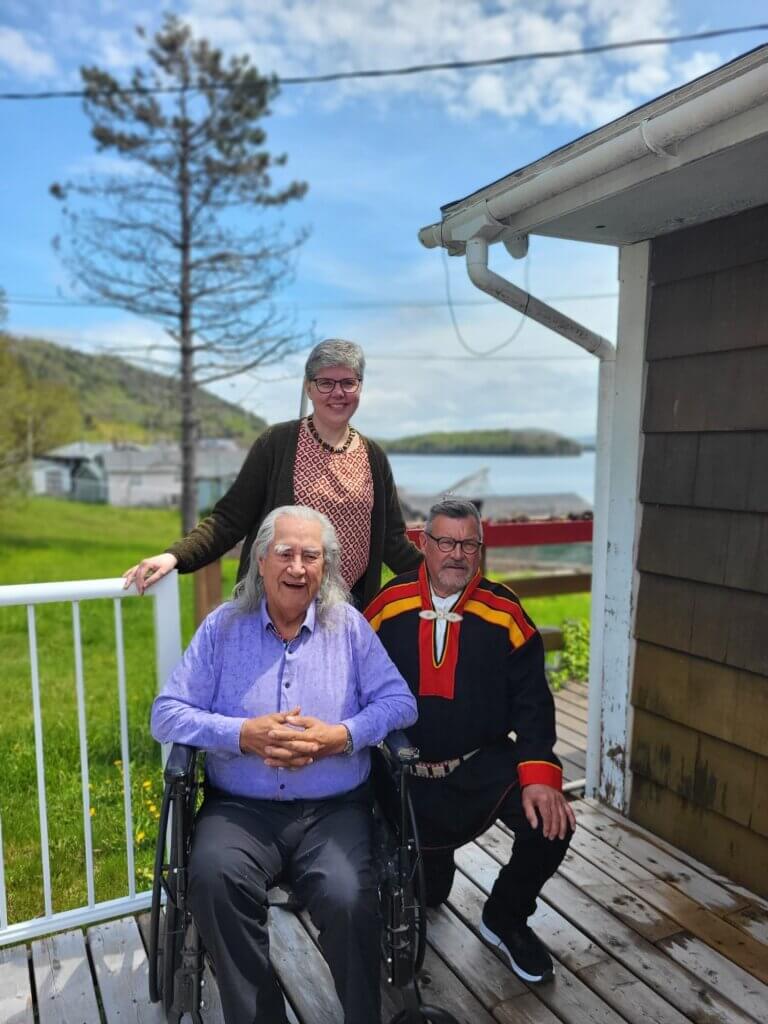
In this picture: Elder Dr. Albert D. Marshall, key voice of Etuaptmumk – Two-Eyed Seeing (centre) with Sámi Elder Jan Erik Henriksen (right) and Thora Herrmann (back) during a sharing and exchange at his home in Eskasoni, Unama’ki (Cape Breton). Photo credit: Nadine Lefort.

Learning through relationships and shared knowledge

We were welcomed into thoughtful conversations about knowledge, relationships, and responsibilities toward the natural world, where Albert D. Marshall shared reflections on Etuaptmumk (Two-Eyed Seeing) not as a guiding concept alone, as a way of living and seeing the world, one that carries responsibility, respect, and balance between knowledge systems, while always remaining grounded in land, water, language and community. This approach encourages collaboration, respect, and an wholistic understanding of environmental challenges. Skyler Jeddore also shared perspectives from his work in the Apoqnmatulti’k project, a Mi’kmaq -led research initiative that studies aquatic species in the Bras d’Or Lake and the Bay of Fundy, bringing together traditional Mi’kmaq knowledge with western science. Nadine Lefort also reflected on the role of collaboration and communication in connecting the work of UNIR with university partnerships and knowledge sharing.

Our conversations with Skyler Jeddore, Nadine Lefort, and Lisa Young were grounded in genuine exchange about how environmental conservation work is shaped in practice through relationships, responsibilities, and place-based knowledge in Mi’kmaq territory. We learned more about how Mi’kmaq-led approaches are carried through everyday stewardship practices, and how these are rooted in long-standing connections to land and water.

In turn, Jan Erik shared reflections from Sámi ways of birgejupmi, offering insights into Sámi approaches to organizing and Indigenous self-determination and governance. He emphasized that responsibilities for land and water are grounded in relationships rather than ownership, and discussed how these perspectives are reflected in legal frameworks such as the Finnmark Act. These resonated with our hosts and opened up thoughtful comparisons on both sides. Thora also shared insights from the development of the Birgejupmi project itself, and how it seeks to create space for co-learning between Indigenous and other knowledge systems, and how this work involves navigating different institutional settings while remaining grounded in long-term relationships and responsibility to place.

We leave our conversations with a deeper sense of connection between our contexts, and with continued motivation to develop Birgejupmi as a space for respectful, collaborative learning across Indigenous and non-Indigenous knowledge systems.

In this picture: Elder Dr. Albert D. Marshall (centre) together with Lisa Young (back right), Skyler Jeddore (back left), Nadine Lefort (left) and Sámi Elder Jan Erik Henriksen (back centre), and Thora Herrmann (right) gathered in a moment of sharing in Eskasoni, Unama’ki (Cape Breton). The exchange centred on Etuaptmumk (Two-Eyed Seeing), knowledge sharing, relationship and mutual learning between Mi’kmaq and Sámi perspectives on land, water, and stewardship. Photo credit: Nadine Lefort.

Carrying Two-Eyed Seeing forward

Meeting with Dr Albert D. Marshall, Lisa Young, Skyler Jeddore and Nadine Lefort was a deeply meaningful moment in our exchange, and a reminder that working with environmental challenges requires openness, humility, balance, and genuine dialogue across different knowledge systems. Two-Eyed Seeing is lived through relations, stories, and responsibilities to community, land and water.
This approach continues to inspire our Birgejupmi project by encouraging us to learn through multiple perspectives, stay attentive to relationships, and ground our work in both knowledge and lived experience.

We are truly grateful to Albert, Lisa, Skyler, and Nadine for welcoming us so warmly into this exchange and for generously sharing their time, experiences, and perspectives with us. At the same time, we deeply appreciated the openness to dialogue and exchange, where Sámi and Mi’kmaq perspectives were shared side by side, allowing for mutual learning and reflection across contexts.

We now very much look forward to continuing these conversations and to welcoming you in Sápmi, where we hope the exchange can continue in the same spirit of reciprocity and relationship-building.

This page is translated with AI. If you have any questions or feedback, please contact us.