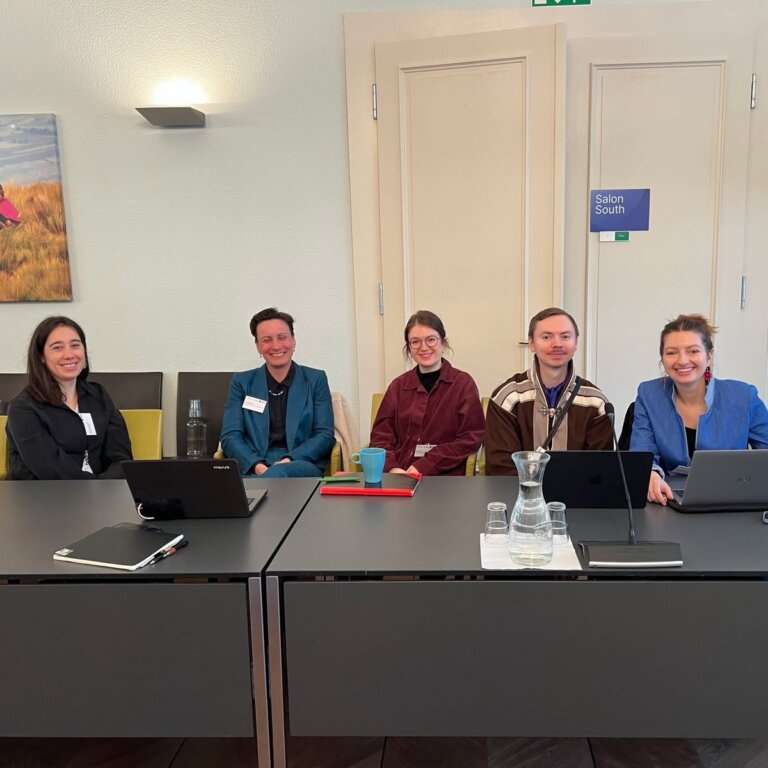
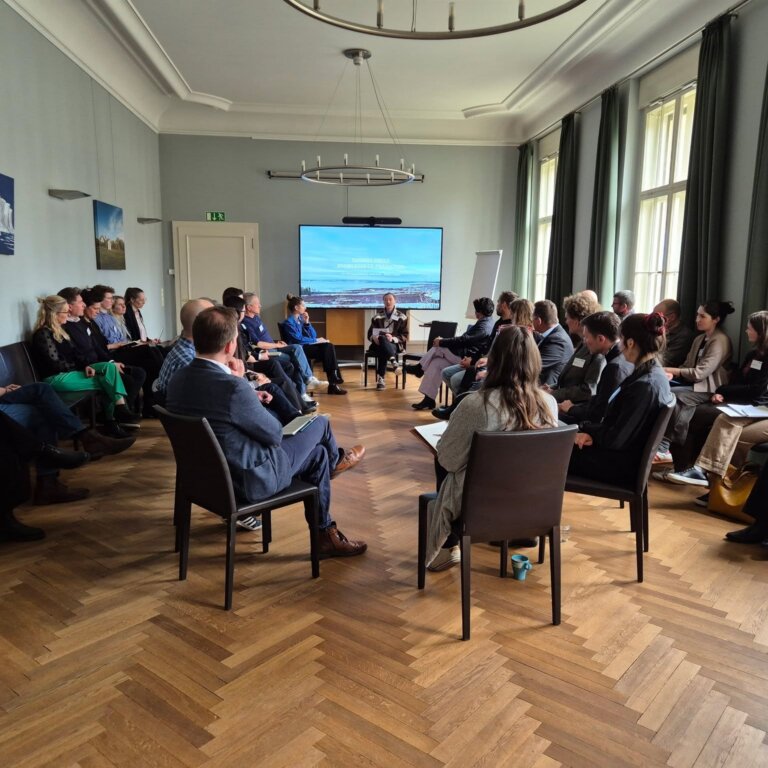
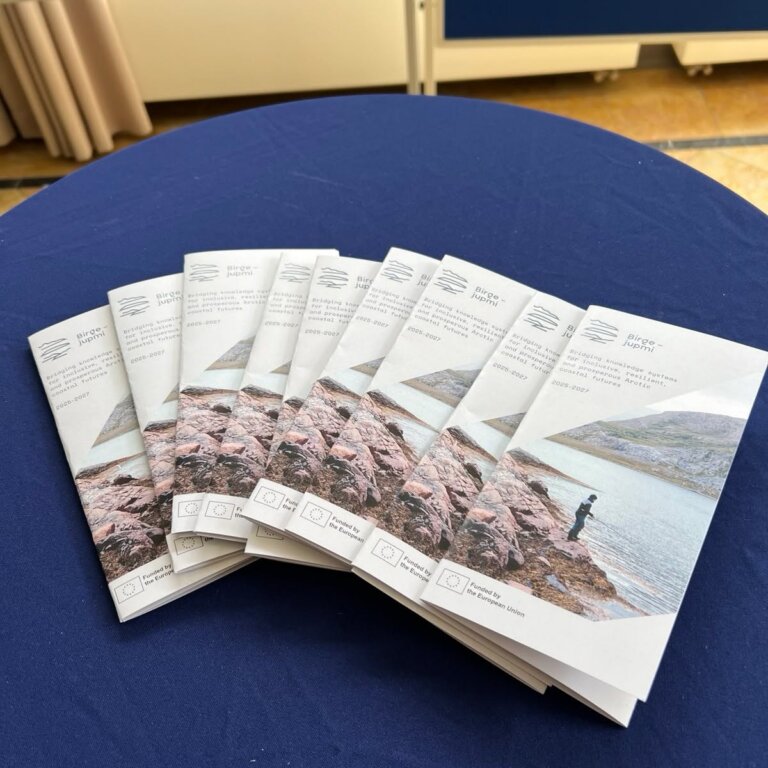
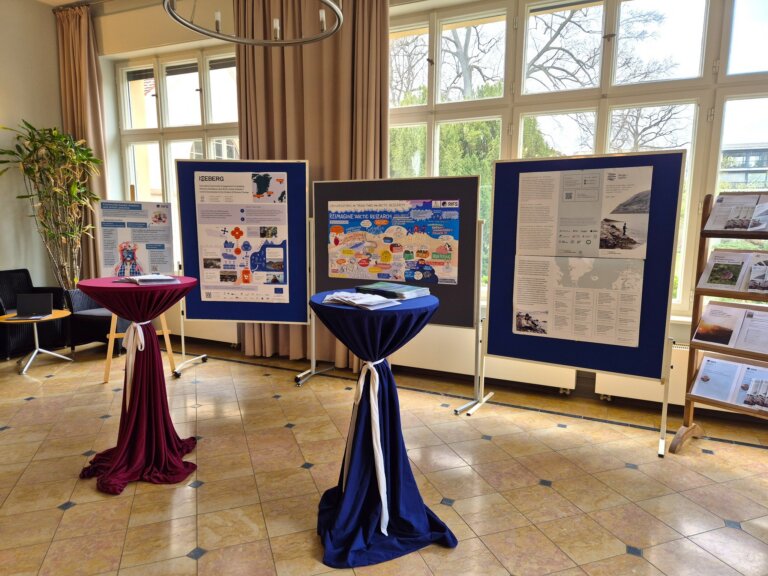
Being invited to the Arctic Dialogue in Potsdam offered an important space for BIRGEJUPMI to reflect on what co-creation in Arctic research actually means in practice, beyond policy language and project frameworks. The discussions unfolded in a setting that actively brought together Indigenous rights holders, researchers, policymakers, and knowledge holders, creating room for exchange across very different institutional and experiential positions.
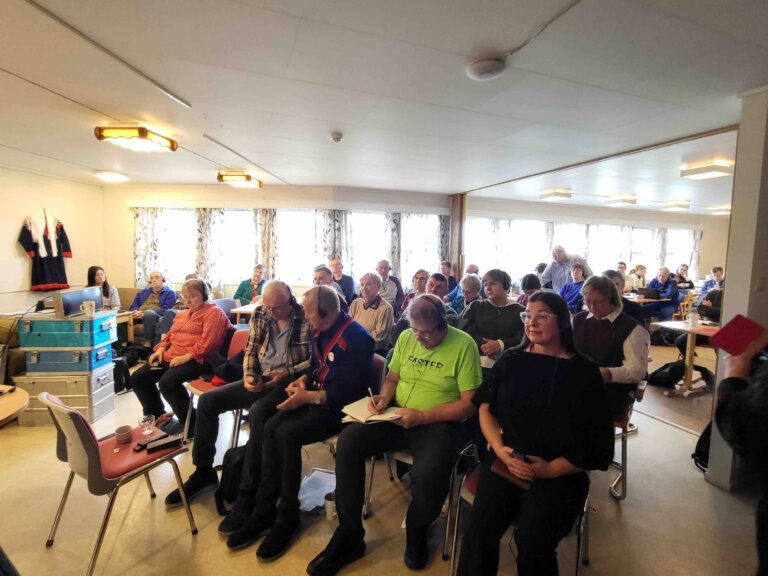
In the first session, Per-Henning Mathisen (Saami Council) and Ilaria Sartini (RIFS|GFZ) shared insights from the BIRGEJUPMI project, not as a finished model of “best practice,” but as an ongoing process shaped by negotiation, learning, and sometimes friction. Rather than presenting co-creation as a fixed method, the discussion highlighted it as a lived relationship that requires time, trust, and continuity. The sharing circle that followed opened up space for participants to speak more freely about their own experiences, what enables collaboration, and what too often interrupts it. These conversations made visible a recurring concern: research timelines rarely align with the slower rhythms needed to build and sustain meaningful relationships.
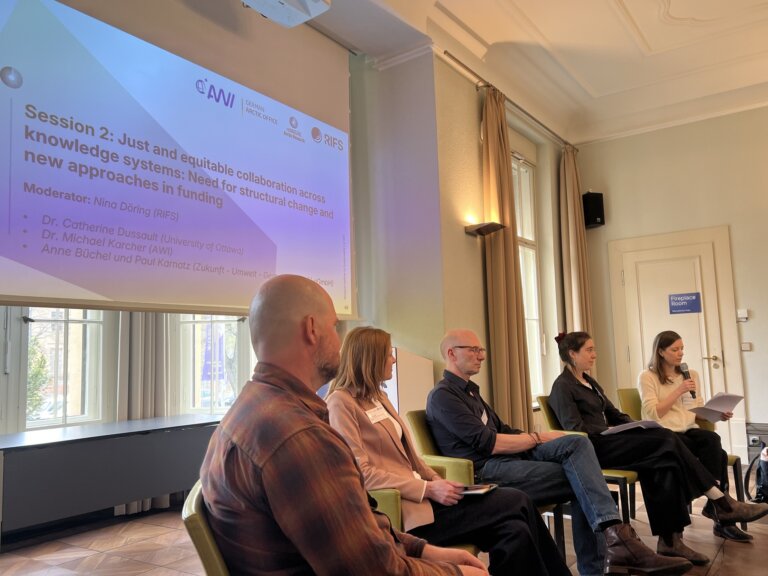
The second session shifted the focus toward the structures that shape research itself, particularly funding systems. Moderated by Nina Döring (RIFS|GFZ), the discussion explored how funding frameworks can either enable or constrain more equitable Arctic research. Prof. Catherine Dussault (University of Ottawa) brought perspectives from Canada, where Indigenous data governance principles such as OCAP® and FAIR are increasingly informing debates on research ethics and infrastructure. Her reflections highlighted how flexibility in funding design is not a technical detail, but a precondition for meaningful collaboration especially when Indigenous partners are involved as rights holders.
Across both sessions, a shared thread emerged: the need to rethink Arctic research as something that is not only produced, but maintained through relationships. This includes recognising responsibility beyond project boundaries, valuing diverse forms of knowledge expression, and ensuring that collaboration does not end when funding ends.
For BIRGEJUPMI, the Arctic Dialogue reinforced that co-creation is not a destination, but a practice that must continuously be negotiated within and sometimes against existing institutional structures.