Hopp til innholdet

North-to-North Exchange: Learning Across Watersheds and Communities in Newfoundland and Labrador

Jan Erik Henriksen and Thora Herrmann recently took part in a North-to-North exchange in Newfoundland and Labrador, connecting with Indigenous leaders, communities, and salmon stewards to explore shared approaches to freshwater stewardship and river management.

Gander River. Photo Credit: Thora Herrmann

Project member: Jan Erik Henriksen, Thora Herrmann

Published: 13.06.2026

Salmon, Stewardship, and Shared Knowledge

During the week-long exchange, Jan Erik Henriksen (UiT), Leader of WP2 & WP5, and Thora Herrmann (UOULU)  engaged with the Qalipu First Nation, local communities, and the Atlantic Salmon Federation in knowledge-sharing focused on Atlantic and pink salmon, Indigenous leadership in freshwater stewardship, and community-led river management.

Our North-to-North exchange brought together Indigenous leaders, First Nation community members, and conservation partners to share knowledge about salmon and strengthen collaboration across rivers. We are especially grateful to Kim Thompson from the Atlantic Salmon Federation (ASF), her thoughtful coordination and local knowledge made the exchange in New Foundland and Labrador possible. By guiding us, connecting us with communities, facilitating meetings, Kim created space for meaningful dialogue and mutual learning throughout our visit.

Indigenous stewardship in the Gander watershed

We visited the Gander watershed, where representatives from Qalipu First Nation and local leaders shared their knowledge and experiences of the deep relationships between people, salmon, rivers, and the environment. Through these conversations, we learned how these relationships form the foundation of Indigenous stewardship and guide community-led efforts to protect watersheds and salmon rivers for future generations.

Qalipu First Nation, Glenwood ward Councillor Frank Skeard, Qalipu First Nation River Guardians Justin Hodge and Danny Stanford, and Qalipu First Nation Gander Bay Ward Councillor Calvin Francis And Gander Bay Band Chief Calvin Francis shared their perspectives on Indigenous approaches to protecting salmon rivers, monitoring watershed health, and proteting freshwater habitats. Their insights along with those of Wallace Squires, Chair of Local Service District Gander Bay North showed that conservation is most effective when it is grounded in strong relationships between people, salmon, and rivers, and guided by Indigenous knowledge, and community involvement.
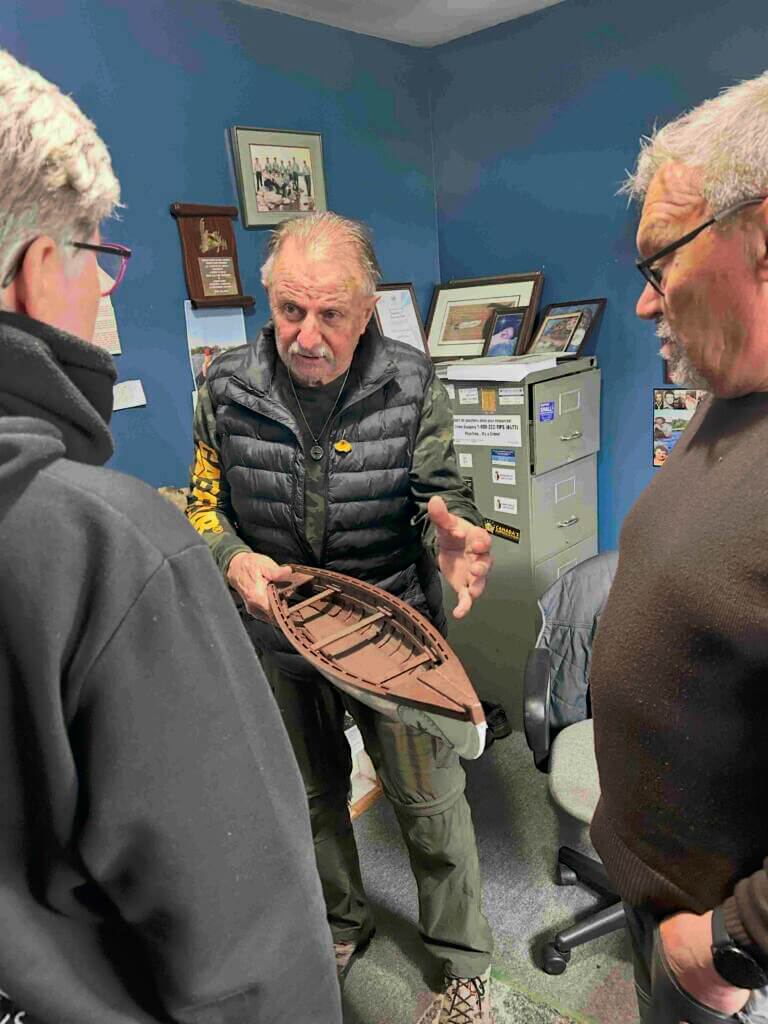
QFN Gander Bay Band Chief explains the famous Gander River boat to Jan Erik Henriksen (UiT) and Thora Herrmann (UOULU). Photo Credit: Kim Thompson, ASF

We saw how First Nation community members monitor river health, identify challenges early, respond to environmental changes, and work together to protect salmon habitat for future generations. Conversations reinforced the key role of Indigenous knowledge and community-based stewardship in understanding, managing, and protecting freshwater ecosystems across the North.

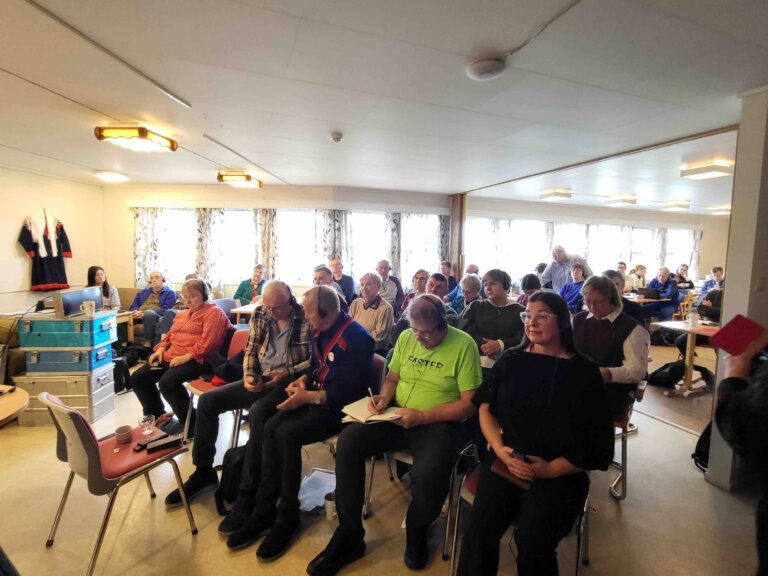
North-to-North exchange of Indigenous knowledge with Qalipu First Nation members in the Gander watershed. In the picture from left to right Thora Herrmann, Oulu University Finland, Kim Thompson ASF,…

Inspiring the next generation

The exchange brought us to Twillingate, where educator Paul M. White shared his work connecting youth with rivers, wild Atlantic salmon, and fly fishing. His approach blends environmental education with hands-on experience, helping young people develop both technical skills and a personal connection to the rivers. Programmes, like the one led by Paul, that engage youth in outdoor learning and watershed awareness are critical to sustaining conservation efforts over the long term and to nurture future stewards.

Collaboration on the Terra Nova River

Our visit continued on the Terra Nova River, where we met with partners from the Freshwater Alexander Bays Ecosystem Corporation (FABEC) and ASF’s Wild Salmon Watersheds program lead Kris Hunter. Together, we discussed ongoing efforts to protect salmon habitat, improve watershed resilience, and strengthen collaboration among communities, organizations, and conservation practitioners. Seeing these partnerships in action highlighted the value of cross-regional exchange. Although our home watersheds may be far apart, many of the challenges we face, climate change, habitat degradation, and the need for stronger local stewardship, are shared across northern regions. So are the solutions.

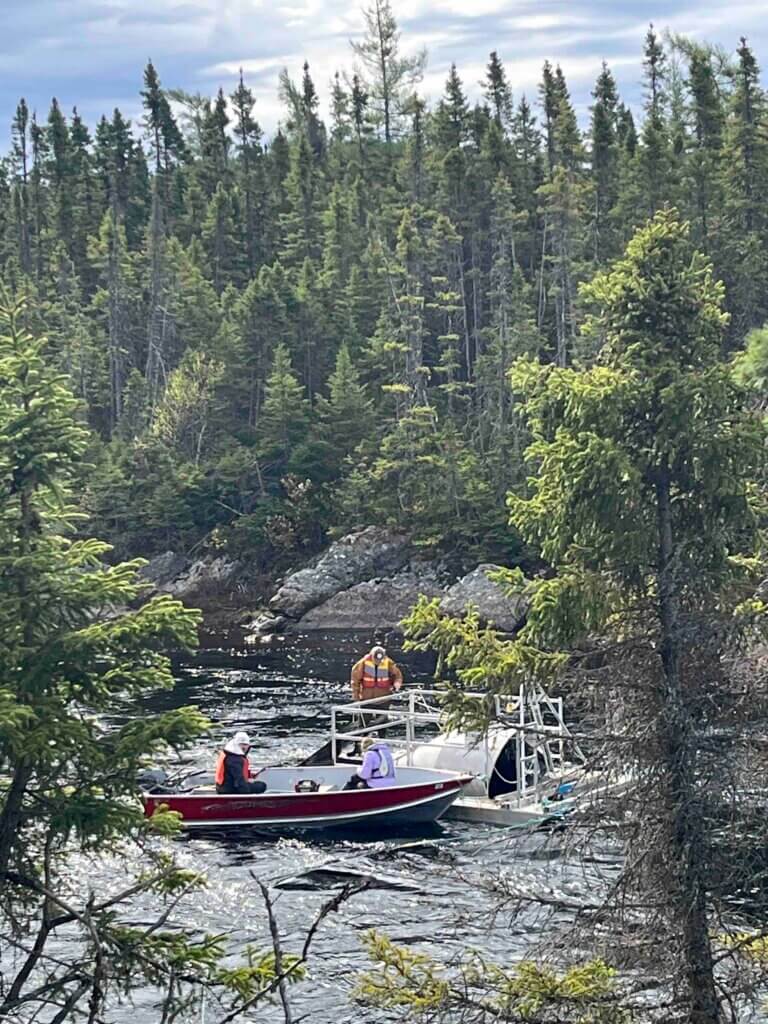
Counting and monitoring smolts with smolt wheel by the FABEC team and ASF on the Terra Nova River to protect the future of wild Atlantic salmon. Photo Credit Thora Herrmann

Exchange with salmon expert at MUN

Our visit concluded in St.John’s where we visited The Rooms and met with researcher Prof Ian Fleming from the Memorial University.

Why North-to-North exchanges matter

This exchange was more than a site visit. It was an opportunity to learn from one another’s experiences, build relationships, and recognize the common threads connecting northern communities working to protect salmon and freshwater ecosystems.

We left Newfoundland and Labrador with new ideas, new partnerships and friendships, and an appreciation for the Indingeous leadership happening on the ground. Most importantly, we were reminded that effective conservation grows from collaboration: between Indigenous and non-Indigenous communities, between Indigenous knowledge, local knowledge and science, and between people connected by a shared responsibility to the waters that sustain us.

To everyone who welcomed us, shared your knowledge, and helped make this exchange possible, especially Kim Thompson and our partners at ASF, thank you. We look forward to continuing these conversations across the North.

Looking Ahead

The conversations and connections formed during this exchange are only the beginning. We look forward to continuing to learn from each other, supporting community-led stewardship, and strengthening collaboration across northern regions.

Once again, thank you to Kim Thompson, the Atlantic Salmon Federation, the Qalipu First Nation representatives, FABEC, and everyone who welcomed us and shared their knowledge throughout the visit.

This page is translated with AI. If you have any questions or feedback, please contact us.