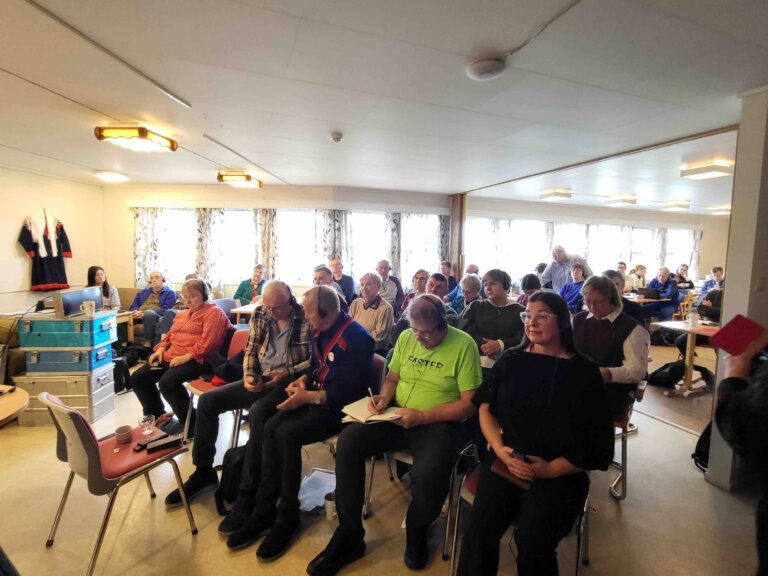
This research sought to assess how climate change mitigation measures impact the lives of young people in coastal Finnmark, specifically examining the unique opportunities and challenges they present. To achieve this, we engaged participants in a co-creative process to design a multimodal exhibition that captures their visions for environmental decision-making and the future. This was facilitated through workshops in Unjárga/Nesseby and Bearalváhkki/Berlevåg, held in close collaboration with local youth club directors and community representatives. These sessions provided a space for young people to reflect on their personal aspirations and their hopes for the future of their communities.
What emerged during these workshops was the importance of the relationship to the land, to the community, to traditions and Sámi culture and practices as a way to live well. In times of uncertainty brought about by climate change and its consequences, the themes of identity, belonging, and wellbeing loomed large. Discussions also revolved around participants’ desire to continue living in their communities and to leave in order to gain experience and access opportunities for personal and professional development. For further information, see Exploring Young Peoples Future Visions – Fieldwork in Várjjat and Exploring Young Peoples visions of the future in Bearalváhkki/Berlevåg .
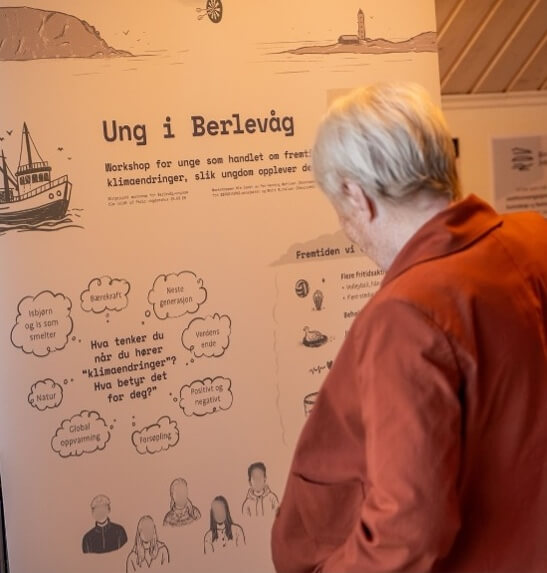
To reach a wider audience, the workshop findings were shared through two distinct formats. In Bearalváhkki/Berlevåg, a thematic illustration was installed at the local youth club to spark ongoing dialogue and reflection among young people (aged 11–18) about their visions and hopes for the future of their community. Meanwhile, in Unjárga/Nesseby, the insights were presented through a dedicated exhibition, showcasing a curated collection of mind maps, drawings, and photography created by the participants, alongside a graphic roll-up that captures the core themes of their discussions.
The participants at the two workshops were keen to share their conversations with a wider audience and asked the facilitators to create a photo collage using images they had collected, reflecting their relationships to the land, family, and community. In response, WP4 organized a sharing event where all the materials created during the workshop were presented to the community. In parallel, the local graphic design company Árvu was entrusted with creating an illustration that captured the key themes of the discussions.