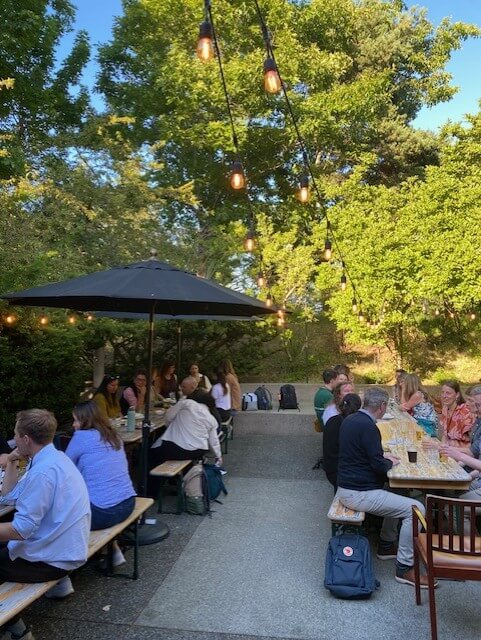
In June 2026, on our North-to North Dialogue tour, we – Ida Hyde and Stephan Dudeck – spent four days at the very interesting and for us 11th Oceans Past Initiative XI (OPI XI) Conference at the University of Victoria, on Vancouver Island (British Columbia, Canada). It was a rich, varied and very interesting experience. Researchers from many different fields presented their work, with a particularly strong concentration on the Pacific, from Alaska in the north to Patagonia in the south on the eastern side of the Pacific, and from Kamchatka in the north to New Zealand in the south on the western side. People of all ages and career stages, from master’s students to professors, presented important research.
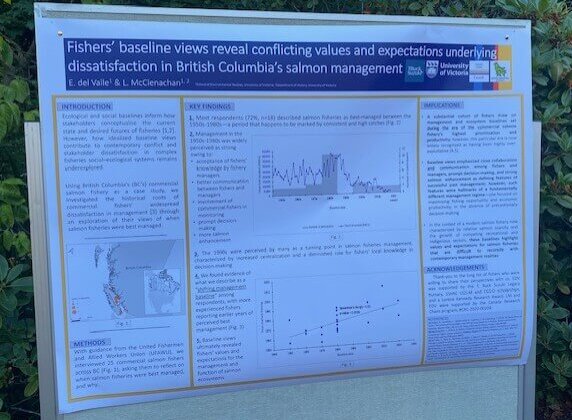
To an astonishing degree, many of the presentations dealt with Indigenous peoples, sustainability, and ways of harvesting, fishing and hunting that demonstrate the importance of historical knowledge for present-day sustainability. Although most presentations focused on ocean species, coastal and river environments, and hunting, gathering and managing marine resources, our overall impression was that there is a need for very different fields of research to come together in collective and collaborative research. This included archival research, archaeology, anthropology, biology, oceanography, political science and other disciplines.
The conference was mainly focused on the histories of the ocean. The emphasis was therefore not so much on the present as on the past, and much of this work came out of archaeological, historical and environmental research. At the same time, holding the conference in Victoria gave it a particularly strong connection to the present through collaboration with Indigenous communities.
Roughly half of the presentations we attended were concerned with collaborative research involving Indigenous peoples, while the other half were more strongly focused on historical and environmental research. There were also many presentations dealing with oceans other than the Pacific, including the Atlantic. A number of these were concerned with the histories of European maritime empires and with historical fisheries and marine exploitation.
This produced an interesting contrast. The conference was about the past, but the present was very visible through the emphasis on collaboration with Indigenous peoples and through ecological questions that have clear contemporary relevance. At the same time, there seemed to be a geographical imbalance. In our impression, the presentations dealing with the Pacific were much more likely to connect historical research with Indigenous collaboration, contemporary struggles for self-determination, and efforts to rebuild Indigenous governance and sustainable relationships with the environment.
Surprising to us, this perspective was less visible in some of the presentations we saw from other global regions. At the same time, it is important to stress that Oceans Past is primarily a conference about historical research. It is not principally a conference on contemporary oceanography, global political issues, or present-day Indigenous approaches to sustainable environmental relations. These issues emerged through particular research projects that connected historical work with contemporary concerns.
The Oceans Past Initiative describes itself as a global research network concerned with understanding long-term changes in marine systems and human–ocean relationships through archaeology, historical ecology and environmental research. One of its important aims is to use knowledge of the past to inform future conservation and fisheries management. That connection between past and future was very strongly present in the conference, although the conference itself remained primarily concerned with environmental histories.
The impression was that the initiative has developed out of a strong interest in marine history and historical fisheries research and has increasingly broadened its scope towards questions of Indigenous knowledge, collaboration and contemporary environmental management. The conference programme itself reflected this broader orientation, including themes such as Indigenous ocean knowledges, ocean stewardship and belonging, and learning from past collapses and recoveries to inform future policy and management.
Some of the presentations were less directly relevant to our own work because they did not engage with the perspectives of Indigenous and local communities or with the particular practices through which communities are restoring relationships with their lands, shores and waters and pursuing self-determination. But there were also many presentations in precisely this direction, and these were particularly important and interesting for us and many of them were connected to the Pacific. There were also some relevant presentations from South America and other regions, connected to Indigenous peoples, marine biology and the natural sciences.
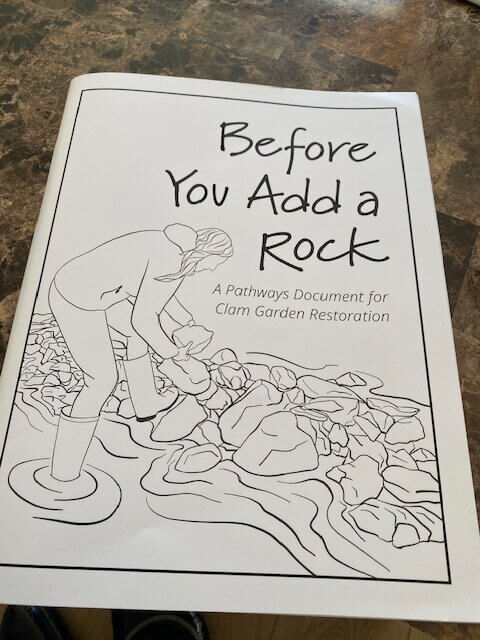
For us, it was particularly interesting to see research on the restoration of shores and on archaeological research into coastal environments, as well as new scientific methodologies for investigating the deep past and connecting it with very contemporary research agendas of Indigenous peoples. One example concerned clam gardens which Indigenous communities are interested in restoring, which led researchers to investigate the history of these gardens and the use of marine resources in them. This historical research was then combined with natural-science research into the conditions under which clams survive and thrive, how large they can become, and how they function as part of people’s food resources. The research suggested that traditional Indigenous ways of maintaining and harvesting clam gardens could create conditions favourable to clam growth, whereas industrial forms of harvesting and management could have different and sometimes less favourable effects. What was especially interesting was the complexity of the Indigenous knowledge involved. It was not simply a matter of collecting clams from the beach or leaving them alone. People modified the beaches by constructing stone walls and other structures, and these modifications affected temperature regimes, sediments and other ecological conditions. Natural-science research could demonstrate some of the ecological effects of these practices. In that sense, the research showed how complex Indigenous environmental knowledge can be.
Predator relationships were another important part of this picture. The relationship between humans and sea otters, in particular, has consequences for clam abundance. Sea otters also harvest clams, and changes in predator behaviour and in the distribution of sea otters can therefore influence the abundance of clams on beaches. This showed how human management can affect a much wider set of relationships within marine ecosystems. The researchers discussed how clam gardens, or more broadly these kinds of constructed intertidal environments, can influence other marine species as well, including octopus, sea cucumbers, kelp and other organisms.
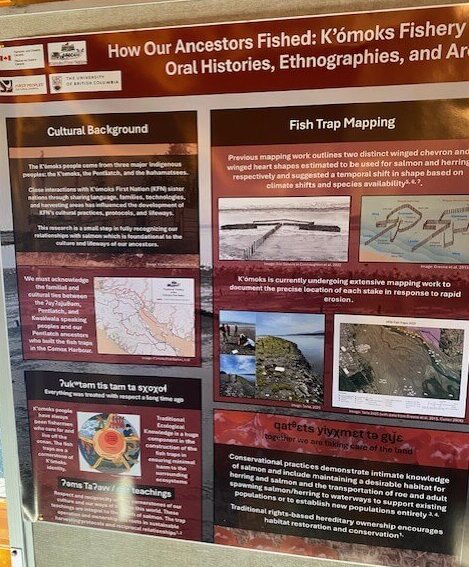
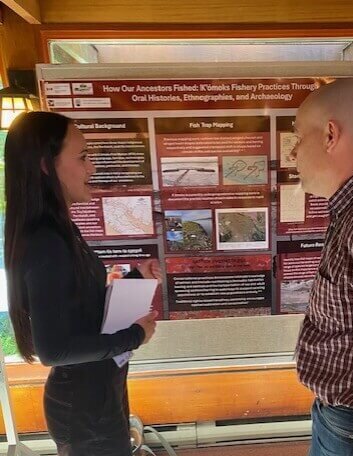
There were also presentations on fish traps and other stone structures built along the shores. Such structures occur in many parts of the Pacific, including the western Pacific. It made us question whether comparable structures existed around the Atlantic that we had never heard about. We know of shell middens and other accumulations of marine remains, including examples in the Baltic Sea, which show how deeply people have used marine resources in the past. In conversations with people involved in the initiative, we also learned that the conference had developed a stronger Indigenous perspective in recent years. This seems to reflect a broader change in academia, as Indigenous people increasingly participate in university education and academic discussions across many different fields, including both the natural sciences, the humanities and social sciences. The same development can be seen in the Arctic. There is an important change taking place in relation to knowledge and its place within academic fields.
Another important point we heard several times from Indigenous leaders and activists was that politicians are often ignorant of the past. We refer to chief Clifford Atleo in particular making the point that political decision-makers do not know enough about history and that, if they were better informed about the past, their decisions about the future would be better. This resonated very strongly with the general argument of the conference. If we want to build a sustainable future, we need to take historical knowledge into account, which is not simply a matter of accumulating historical information. It also means understanding the relationships, practices and forms of knowledge through which people have lived with marine environments over long periods of time. That was one of the most important lessons of the conference: the past is not simply something to be reconstructed by historians and archaeologists. It can also be an important resource for contemporary Indigenous communities seeking to restore relationships with marine environments, strengthen governance and develop sustainable futures.